Google I/O 2026 landed in May, and it was the biggest shake-up to Search in over two decades. Google reimagined its search box for the first time in 25 years, set background agents to work around the clock, started booking things on your behalf, and began building parts of the answer from scratch on the fly.
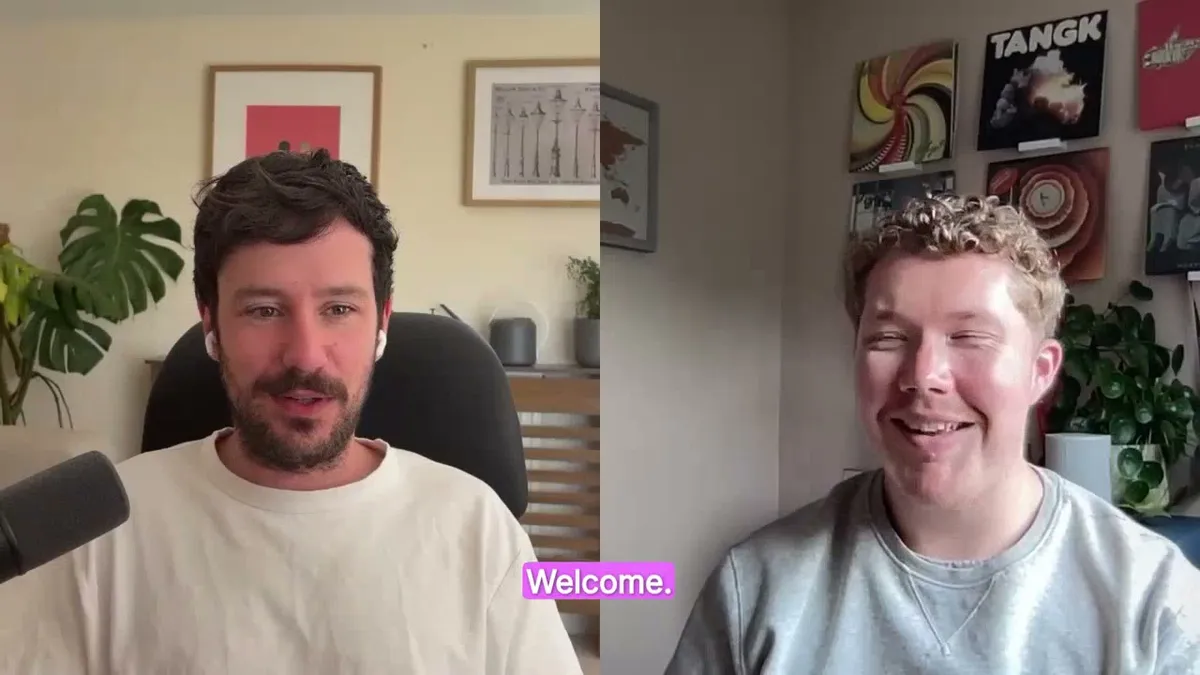
Most of the coverage has been either breathless or generic. So Louis grabbed Jack, fresh off a few weeks in Japan and slightly behind on the announcements, to pull out the four updates that actually change something for healthcare marketers. What to act on, what to ignore, what to start preparing for, and the one shift that is equal parts exciting and unnerving.
If you have followed our recent series on how AI is reshaping the patient journey, a lot of this will rhyme. This is the platform-level version of the same story.
What we cover
Google is calling this the biggest upgrade to its search box in over 25 years. In practice, it is a box that expands as you type, takes text, images, files, videos and even Chrome tabs as inputs, and suggests ways to widen your question that go well beyond autocomplete. Ask a follow-up from an AI Overview and you slide straight into a conversational back-and-forth in AI Mode, which is really Gemini sitting inside Search.
Strip away the launch language and, for now, it is a bigger box. But that read misses the point. This is the gentle first nudge towards AI Mode becoming the default way people search — the same incremental playbook Google has always used to move billions of people onto something new. They were never going to flip a switch overnight.
For healthcare, the consequence is the one we have been flagging for years. Searches get longer, more conversational and far more personal. The dependable, high-volume keywords like “knee surgeon London” give way to messy, sentence-length queries that no two patients phrase the same way.
Footage: Google I/O 2026
These are agents that run in the background around the clock, watching the web for changes and notifying you when something relevant happens. Google’s own examples are apartment hunting and getting alerted when a favourite athlete drops a sneaker collaboration.
Louis and Jack’s slightly cynical take: this is Google Alerts on steroids. It is useful, but very little about it is genuinely new, and the consumer use cases on show feel thin. ChatGPT has had a version of this for a while, and plenty of tools already monitor the web perfectly well.
Footage: Google I/O 2026
This is the one that could be a hint at the future. Google is extending agentic booking from travel into local experiences and services. You describe what you want — say, a private karaoke room for six on a Friday that serves food late — and Search assembles live pricing and availability with direct links to book. For categories like home repair, beauty and pet care, Google will even phone businesses on your behalf to check.
For healthcare this is some way off, and it will almost certainly be one of the last sectors it reaches. A knee operation is not a karaoke booking. But the direction of travel matters. If a patient can eventually say “book me in with the consultant I was just recommended” and have an agent handle it, the pressure lands on providers to keep their availability and information genuinely accessible and current: machine-readable, structured, up to date. That raises a real question about what a website is even for. Less a destination, more a live data source an agent reads from.
Worth remembering, though, that Google has tried phone-based booking before, with Duplex, and it never fully landed. This is the second proper attempt.
Footage: Google I/O 2026
The most interesting of the four. Search will now build a custom interface for your question on the fly: interactive visuals, tables, graphs and simulations, assembled in real time. For ongoing tasks like planning a wedding or a house move, it can build a dashboard or tracker you keep coming back to — effectively a mini app.
Part of this feels like Google overreaching, trying to become the place you store and manage your life. We are sceptical that bit lands. But the shift underneath it — search becoming far more visual and interactive — is real and significant. If the first update was just a bigger box, this is a much richer answer.
For healthcare, picture the top-of-funnel research we used to build SEO plans around. The symptom-checking, the “what is wrong with me” before a GP visit, rendered as interactive, visual journeys that pull data from many providers at once. That is a more powerful version of Dr Google than anything a text chat offers today.
Which leads to the part that is both exciting and a little unnerving. If Google comes to own self-diagnosis and the health conversations currently happening in ChatGPT and Claude, the advertising data it holds on people steps up enormously. Google already monetises that data, and has done for twenty years; the AI labs have not even worked out how they will. Combine all four updates and you can see a path where Google is not just the best ad platform ever built but, in effect, the internet itself. You go to Google, it answers you, and it serves the most relevant ad imaginable at the most relevant moment.
Footage: Google I/O 2026
The upside nobody is talking about
Jack’s optimistic take, and a fair one. If answers move into AI, the lazy end of SEO finally dies. The arms race of thin geo-pages, the “knee clinic in Essex” content that exists only to feed Google context no human needed, stops working. What replaces it is the stuff that is actually hard to fake: who your clinicians are, the procedures they specialise in, their view on what good aftercare looks like, the real outcomes and stories behind them.
That is genuine experience and authority, and it is exactly where AI-era visibility is won. The likely effect is marketing that is a little less lazy and a lot more honest about what it adds to the conversation. For specialist healthcare providers with real expertise to point to, that is a tailwind, not a threat.
Why this matters
Two things follow from all of this, and neither is new if you have been paying attention. They are just accelerating.
AI search is really a continuation of zero-click search, and we are already seeing it in client data: impressions down, average position up, fewer people actually landing. When someone does reach your site, your conversion rate and your USPs matter far more than they used to.
The durable hedge is owning the relationship directly rather than renting attention from a platform that may or may not feel like recommending you next quarter. First-party data, email, the audiences you actually control.
A smaller, higher-intent audience is only an opportunity if your site is built to convert it.
We went deep on exactly this in the most recent piece in our series, Stop renting your patients from Google. And we will follow this one up with a paid media view on what I/O 2026 means for Google Ads in healthcare — that needs its own conversation.
Who should watch this
- Healthcare marketers trying to work out which I/O headlines actually change their plan and which are noise
- Hospital and clinic digital teams whose organic traffic is softening as answers move into AI
- Private practice owners weighing how much to keep investing in a website versus owning their patient relationships directly
- Anyone who wants the healthcare-specific read on Google I/O 2026 rather than the generic recap
We’re a specialist healthcare digital agency with over a decade of experience working with the UK’s leading private healthcare providers. Our access to anonymised, aggregated data across national hospital groups and independent practices gives us a unique lens on how patient behaviour is changing, and what to do about it.
Want to know what AI search actually means for your patients?
We’ll benchmark your visibility across AI search, audit how your site captures and converts the higher-intent traffic that’s left, and show you the highest-impact places to start before the shift accelerates.
Get a complimentary AI search readiness review →← Read: Stop renting your patients from Google. Start owning them.